Interview — Knats
»In Newcastle, there’s always a way forward«
Since the release of their album A Great Day In Newcastle, Knats have been making waves far beyond Britain. Blending fresh, energetic and meticulously crafted jazz with evocative poetry, the young band explores both the character and the hardships of life in North East England. This interview explores what it means to conceal your musical passion in a culture shaped by toxic masculinity, how strict compositional constraints can lead to better music, and the lessons that can be drawn from the work ethic of a traditional mining community.
17. September 2026 — Interview & text: Jonas Meyer, Editing: Chloe Jacob, Photography: Roberto Brundo

“Trust me when I say that everything you’ve ever felt has been experienced by another human being before you. You may not think so, but it’s true,” writes Benjamin Myers in his novel The Offing, adding: “That is what poetry is. It exists to remind us of this very fact. Poetry is mankind’s way of saying that we are not entirely alone in the world.”
In his book, Myers tells the story of a sixteen-year-old boy who, in the late 1940s, decides to leave his village in North East England. Driven by a longing to escape his family’s expectations, he sets out in the hope of finding something beyond the horizons he has always known. Like generations before him, he is set to become a miner and spend his life extracting coal. In this part of the country, that is simply how things have always been, and for many, the way life was meant to remain.
On his journey south, he meets an elderly woman who lives in a solitary cottage on the Yorkshire coast. She introduces him to the world of literature and, in doing so, opens up an entirely new perspective on what his life could become. And without giving too much away: he’s never gonna be a miner.
It is from this former mining heartland — the very region the sixteen-year-old protagonist of Myers’s novel is so desperate to escape — that Knats also hail from. More specifically, they come from the port city of Newcastle upon Tyne.
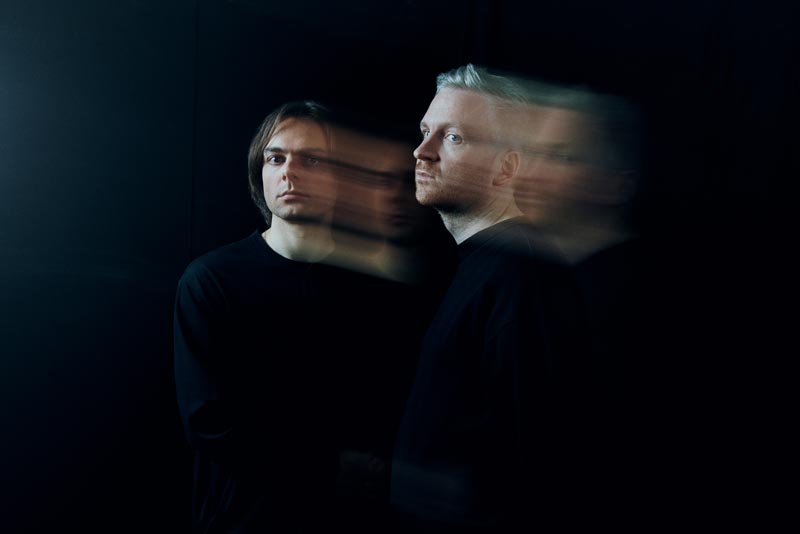
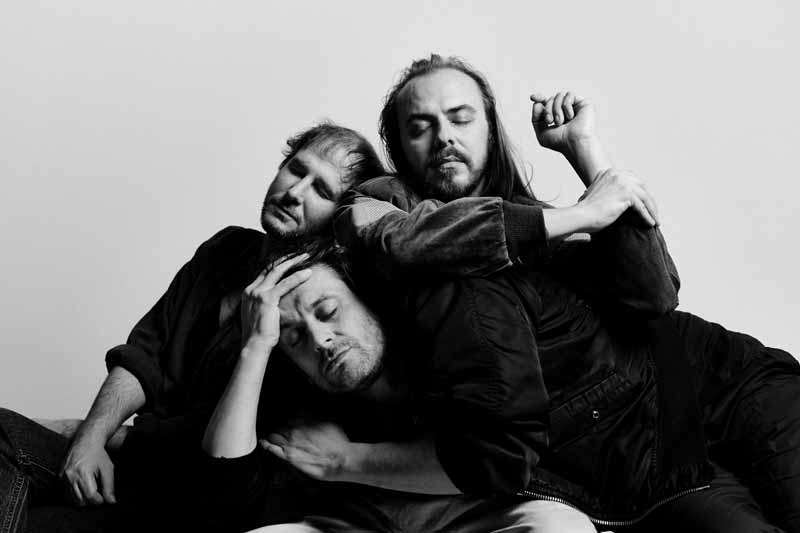
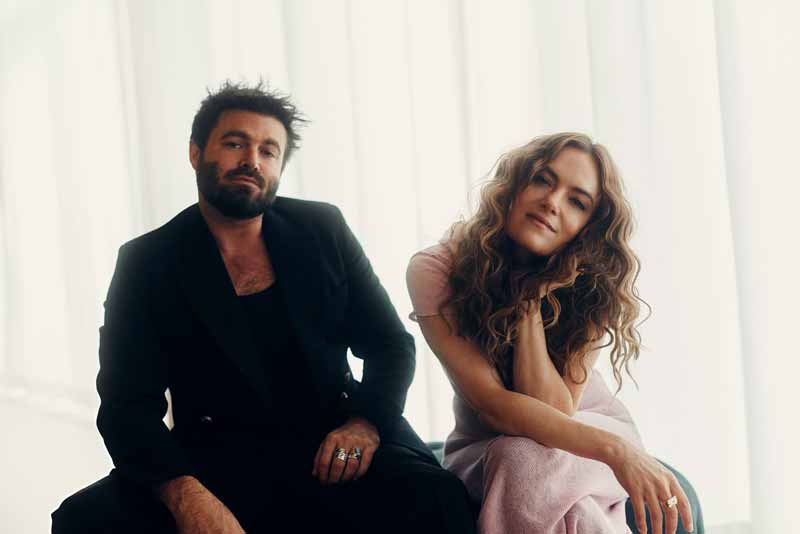
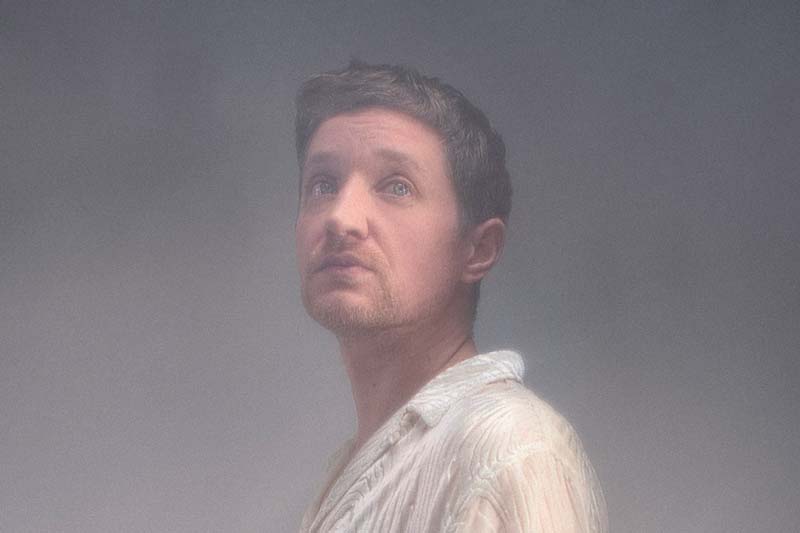
The youthful group — all six members in their early twenties — was founded by bassist Stan Woodward and drummer King David Ike-Elechi, who first met as Year 7 pupils. They began as classmates, became best friends, and now make music together. Over time, the band grew into the six-piece ensemble it is today. Trumpeter Ferg Kilsby was the first to join Woodward and Ike-Elechi, followed by saxophonist George Johnson and pianist Sandro Shar. The final addition was poet Cooper Robson.
And yes, you read that correctly. On their second album, released in early May, Knats weave elements of poetry into their music. But these are far from whimsical tales. Rather, Robson’s poems explore many facets of life in a region that, until the closure of its last coal mines, was shaped by hard work underground and a stricter set of values above it. Today, that same region is grappling with a difficult mix of limited opportunities, toxic masculinity, drugs and alcohol — issues that have become their source of motivation.
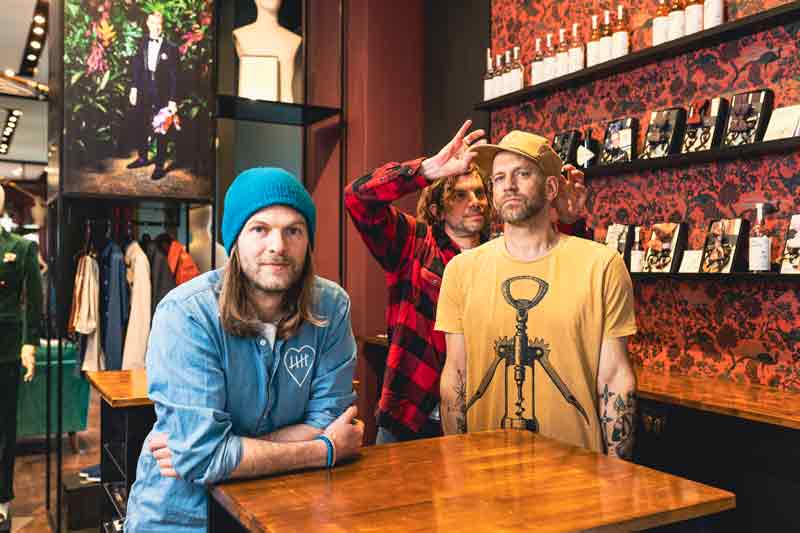
Yet Knats did not call their album A Great Day In Newcastle without good reason. They have chosen to approach their hometown and its problems with love rather than anger; to embrace it rather than push it away; to speak of it with appreciation rather than contempt. The result is a vibrant, fresh and powerful jazz album that really leaves its mark—and that you simply can’t stop listening to. Having played at the Brick Lane Jazz Festival in London and recently appeared on the BBC’s Later… with Jools Holland, Knats are beginning to attract attention beyond Newcastle. With their new album, they just have been shortlisted for the 2026 Mercury Prize. It is now our pleasure to introduce the band to our readers in Germany. For our interview, we met four of them on a great day in Berlin.


»If you hug someone as a joke, you're still hugging them.«
MYP Magazine:
Stan, a couple of weeks ago, you told the audience on stage at the Brick Lane Jazz Festival: ‘Tell your family and friends you love ‘em!’ Why was that so important to you in the moment?
Stan:
As far as I remember, I said that at the end of Azure Blues, one of the tunes from our new record. It doesn’t feel particularly genuine to us to stand on stage and tell people they should love each other. That’s why my remark was more of a tongue-in-cheek joke. I basically just said it to be funny.
Ferg:
At the same time, I think even when it’s meant as a joke, it’s a good way to get people to come closer together. If you hug someone as a joke, you’re still hugging them.
Cooper:
Ferg’s right. Of course, all that lovey-dovey stuff, when done earnestly, can be a bit much. But if you do it as a joke, it’s funny, and at the same time people can take it at face value and think, ‘Oh yeah, man, I love you.’

»You only realise what’s so precious once you’ve left it behind.«
MYP Magazine:
Speaking of love: At the Brick Lane Jazz Festival, you also explained that your new record is a love letter to your hometown of Newcastle — a place that you left a couple of years ago when you moved to London. Is it easier to write a love letter from a distance? Does it sharpen the eyesight?
Stan:
Yeah, to a degree. When you’re not there, you really miss it. It’s just like everything else in life: you only realise what’s so precious once you’ve left it behind. We’ve travelled a lot with the band, and it’s precisely at times like those, that you realise what makes home so special compared to elsewhere.
MYP Magazine:
Ferg, you’ve moved to London, just like Stan. What exactly do you both miss about your hometown whilst you’re there?
Ferg:
The sarcasm! There’s a lot of sarcasm in Newcastle that doesn’t always translate. People in London don’t always get that sort of humour. It’s a bit like an English person going to the US, where people might not get certain jokes either.
Stan:
For me, it’s mostly the people. In London, people are very different. In Newcastle, folks are generally a bit friendlier — or, to be more precise, more outgoing. They’ll stop you in the street as you’re walking past just to say hello. It’s the same when you’re on the bus; people just start chatting to you. That’s not just because Newcastle is smaller, there’s also a strong sense of community.


»For many, drug abuse stems from boredom, depression or loneliness.«
MYP Magazine:
In your musical love letter to Newcastle, you tackle a lot of difficult issues, such as toxic masculinity, alcoholism, and violence. Is the album an angry reckoning with where you come from?
Stan:
Nah, it’s more about raising awareness of the struggles that people face who have different lives — lives with fewer opportunities. I’m not just talking about fewer opportunities for creative expression. Generally, limited opportunities lead to boredom, and that, in turn, is often why people turn to alcohol or drugs. Unless, you enjoy going out and getting fucked up — which, I must admit, was something I enjoyed as well. But for many, drug abuse stems from boredom, depression or loneliness.
»There was always a fight somewhere in Newcastle.«
MYP Magazine:
Being on stage at the Brick Lane Jazz Festival a couple of weeks ago, you introduced your song Never Gonna Be A Boxer with the words: ‘The next song’s about someone whose dad wants them to be a boxer, but they want to be somebody else: a creative, perhaps. Or a plumber. But definitely not a boxer.’
Stan:
Yeah. This remark referred to a time when I was at school, and everyone just seemed to be out looking for a fight. Where I come from, there’s this culture where men are expected to behave in a typically ‘manly’ way, which is a pretty toxic culture. You know, there was always a fight somewhere in Newcastle.
MYP Magazine:
Watching you on stage, however, you still look as though you’re holding your bass like a weapon…
Stan:
Maybe it has left its mark on me after all. In Newcastle, there’s a big fighting culture — loads of lads on the estate get into fights all the time. It’s this awful culture where everyone’s terrified of it, but feels compelled to do it anyway. That was the idea behind the song, but again, it’s meant to be a bit tongue-in-cheek and ironic. Simultaneously, there are parts of the album that are meant to be taken literally — the introduction poem, for example. However, even that still has humour in it.
Cooper: (smiles)
A little bit.

»Working-class kids still face a real lack of opportunities.«
MYP Magazine:
In an interview with The Guardian, you revealed that at school you tried to hide the fact that you were making music from your friends.
Stan:
Correct. I taught myself to play the guitar when I was ten. Back then, the other kids saw it as embarrassing to be a musician, or even to be musical. It was just one of those things you didn’t want people to know about.
MYP Magazine:
How does the community in Newcastle generally deal with children who fall outside the norm?
Stan:
Working-class kids still face a real lack of opportunities, especially for creative expression. We’re trying to change that by offering music masterclasses. A lot of kids still end up out on the streets doing all sorts of shit.
Cooper:
Yeah, but like many other cities, Newcastle has very different areas and very different types of people, but despite all that, its core identity is still tied to the traditional, “manly” working-class bloke. Even though it’s increasingly becoming a student city, with ongoing gentrification and more young professionals moving in, that identity remains. As soon as you leave the city centre and head out into the surrounding areas, it’s exactly as Stan described. It isn’t pretty.

»The song is about all the graft that went into pit mining, and about how massively fucked up it was.«
MYP Magazine:
102 years ago, on 11 May 1924, a certain Jackie Milburn was born. What significance does this figure hold for Newcastle? And why did you dedicate a track to him?
Stan:
At Christmas 2024, I was sitting in a pub with my best friend and his dad, who told us about Jackie Milburn. He was a famous football player and trainer raised in the Newcastle area, working half days in the coal mine and half days on the pitch. People revered him and everyone simply called him ‘Wor Jackie’ — ‘wor’ is Newcastle dialect for ‘our.’ But our song is less of a tribute, even though it shares the same title. Instead, we wanted to create an archetype, a figure who could represent the topic we wanted to talk about: Wor Jackie is about all the graft that went into pit mining over decades, even centuries in North East England, and about how massively fucked up it was. To capture that, Cooper wrote this brilliant poem about pit mining, which goes:
Beads of sweat cascade from skin
Sinews punch as pistons
The furnace hungers
Its palate honed
To men
Enlisted for wrist strength and persistence
»When we started out, we would just sit there mass-emailing venues, and it took us years and years to get a gig.«
MYP Magazine:
Do you have any family members who worked in the pit?
Stan:
Yeah, my godfather was a pit man.
Ferg:
My grandparents were steel workers. But my parents both work in regular jobs. Nevertheless, it didn’t necessarily make growing up any easier, especially for my mum. Her dad died when she was nine, and she was raised by her mother alone before eventually attending Oxford. Looking at her today, she still works her arse off.
Cooper:
I do not have much personal experience with pit mining, which is why I wanted the poem to focus more on work ethic. The North East of England has a long history of shipbuilding and heavy industry, so traditional values are deeply ingrained. The guiding principle is essentially: work hard and you’ll get good results. My grandmother is a perfect example of that mindset. She loves to say, “The more you put in, the more you get back…”
Stan:
…which is kind of what we’ve done with this band. That’s why it’s doing so well now — it’s come from a lot of graft. But getting here was tough; it’s been a non-stop journey. When we started out, we would just sit there mass-emailing venues, and it took us years and years to get a gig. Behind it all was the same mentality: the more you put in, the more you get back.

»When you're constantly surrounded by that sort of music as a child, you just absorb it.«
MYP Magazine:
Part of this journey also involved experimenting with different musical styles. Why did jazz ultimately become your genre of choice?
Stan:
I grew up listening to a lot of music. My dad was a drum & bass DJ. When I was with him, I was constantly surrounded by music, and jazz was a big part of that. He used to play a lot of Herbie Hancock, Miles Davis and Charles Mingus in his car. When you’re constantly surrounded by that sort of music as a child, you just absorb it. So, over the years, my passion for it grew, which eventually needed an outlet.

»Everyone matters so much in the band — as well as everyone around Knats.«
MYP Magazine:
George, you met King on Discord during lockdown and joined Knats a little while later. As a saxophonist, have you always focused on jazz?
George:
I think so. Like Stan’s dad, mine is a musician as well. When I was a kid, he used to put jazz records on, and I always felt that there was just something special about it. Jazz is like a puzzle — a constant interplay of improvisation and communication. That’s one of the reasons I love being in this band so much. Over the years, we’ve not only become good friends, we’ve also gotten to know each other musically. Now it’s at the point where we can almost predict what the others are going to play, sometimes before they even know themselves.
What’s more, I feel I’ve learnt a lot from this band. I’m not from Newcastle myself, and I grew up in a different environment. Even though we come from very different backgrounds, it’s amazing to see that we all share the same love for this music. It’s such a fresh sound because everything comes together in it: Stan’s writing, the way King makes the tunes sound so different, and the creative touch that Ferg, Cooper and Sandro each bring to it.
Stan:
Yeah, everyone matters so much in the band — as well as everyone around Knats. Everybody has their own individual thing. For me, it all adds up.

»That's exactly what I love so much about our band: Knats is pushing boundaries.«
MYP Magazine:
When you played in Liverpool in May, one of your fans posted an enthusiastic story on Instagram about your performance, including the comment: “Jazz is not dead!” Have you ever had the impression that the genre was dead?
Stan:
I don’t think jazz will ever die.
George:
Perhaps the fan was thinking more of the traditional kind of jazz. But you could also ask: is classical music dead? Is soul music dead? Is R&B dead? In the end, it’s all about how you bring a style to life and interpret it in the present day. That’s exactly what I love so much about our band: Knats is pushing boundaries. And I think that’s what really resonated with the fans at that moment.

»If you work within strict boundaries, you often end up making more interesting music.«
MYP Magazine:
Stan, you’re the one who writes the music. Could you take us inside your mind and heart for a moment and explain how, when and where your compositions come about?
Stan:
For me, everything starts at the piano. The first few songs I wrote for the new album, such as Wor Jackie and Never Gonna Be A Boxer, were born of a fairly strict compositional approach. Wor Jackie in particular started as an exercise in using a limited number of notes. I was heavily inspired by the French composer Olivier Messiaen, a revolutionary in harmonies. He developed a system of symmetrical scales, known as Messiaen’s modes, which I use when composing. I try to stick rigidly to a given framework, like only using Messiaen’s modes, and challenge myself to create something within it.
MYP Magazine:
What about this technique appeals to you?
Stan:
If you work within strict boundaries and set yourself clear rules, you often end up making more interesting music, at least in my experience. That said, I was completely burnt out after the first album and was so unhappy with it that I ended up trying something different.

»Newcastle was constantly on my mind, and I wanted the album to explore themes connected to where I come from.«
MYP Magazine:
Your new album stands out not only for its music, but also for another fundamental element: Cooper’s poetry, which makes the whole thing truly special. How exactly did this idea come about?
Stan:
I locked myself away for about nine months to write music and spent pretty much all my time at the piano. I was in London, which should have been the ideal place to make music, but the whole time I just found myself thinking about home. Newcastle was constantly on my mind, and I wanted the album to explore themes connected to where I come from. But because the kind of music we make doesn’t really give you much opportunity to talk about it — other than in interviews like this — I had the idea of putting an introductory monologue at the start of the album, laying out the themes of the songs.
MYP Magazine:
This resulted in the introductory track 7 Bridges To Burn, which begins with one of Cooper’s poems.
Stan: (smiles)
Yeah, it’s like the beginning of a fairytale, isn’t it?
»I was asked to create something in which I spoke just as openly and loudly about the difficulties of the region as I did about the things I love.«
MYP Magazine:
Cooper, had this poem already existed before? Or did you write it especially for the new Knats album?
Cooper:
I already had a poem about the North East up my sleeve. I was pretty happy with it, to be honest — it’s one of my favourites. When Stan asked if I would contribute some poetry to the album, I thought to myself “I’ll use what I’ve already got.” However, I quickly realised it wasn’t working.
MYP Magazine:
Why not?
Cooper:
In my texts, I speak a lot about the North East. That has always been a long-standing theme in my poetry. But I’ve always looked at things through rose-tinted glasses. When I started writing for this project, the task was different: I was asked to create something in which I spoke just as openly and loudly about the difficulties of the region as I did about the things I love, without dwelling on the wounds. The way I phrased it, it almost reads like a love letter. Because when you write a truly heartfelt and sincere love letter to someone, it is usually not to some fairytale character, but to a real person — someone with strengths and weaknesses, endearing qualities and imperfections.

»When you really love someone, you love absolutely everything about them.«
MYP Magazine:
And yet we humans tend to romanticise those we’ve fallen for.
Cooper:
Of course! When you really love someone, you love absolutely everything about them. In fact, even if there’s one thing about a person that really gets on your nerves, you’d miss it if it suddenly disappeared.
In any case, I ended up writing something completely new, which was an absolute blessing. It feels much more intimate and much more consistent with the rest of the piece.
MYP Magazine:
Who is this “young lad down the way, a pugilist, with tight fists like that meme of Arthur,” as the poem says?
Cooper:
Like in Wor Jackie, it’s an archetype, a person — or several persons — going through different stages of life. Writing it, I felt like describing a hundred people I’ve seen in my life, a reflection of their difficulties.

»I started keeping a journal. And somehow, my entries ended up rhyming.«
MYP Magazine:
How did you get into poetry?
Cooper:
I originally studied maths at uni — I was very objective-minded growing up. When lockdown hit, I struggled a lot with my mental health. I was living with my grandmother at the time. One day she was watching This Morning, that awful UK breakfast TV programme. They recommended journalling as a way of processing emotions. Even though the show was horrible, I followed the advice and started keeping a journal. And somehow, my entries ended up rhyming.
As I began to feel better over time, I stopped writing, but soon found myself missing it. So I started again, although this time not about myself, but about the world as I saw it. And then over patches of on and off, I kept writing, and then, about three and a half years ago, I did my first gig. It was not enough; I just kept wanting more.


»We'd actually approached a different producer first, but for one reason or another it didn't work out.«
MYP Magazine:
Another figure who played a key role in the creation of your new album is Geordie Greep, the former frontman of British rock band Black Midi. He agreed to produce your album pro bono. How did this collaboration come about?
Stan:
Geordie is a good friend. King and I have known him for quite a while, and we’ve made music together in the past. When he did his first UK tour, we asked if we could support him, and Knats ended up opening the first three tours he did.
When we were working on A Great Day In Newcastle, we’d actually approached a different producer first, but for one reason or another it didn’t work out. It was incredibly frustrating because we couldn’t see a way forward. Then, all of a sudden, Geordie stepped in and said, “I’ll produce it — and I’ll do it for free.”
MYP Magazine:
What prompted him to make such a generous gesture?
Stan:
At the time, Geordie was starting to get more involved in production. He saw our project as a chance to improve his skills in that area. That was brilliant for us, of course.

»That's the most valuable quality in a producer: to have a savvy ear not personally involved in the music.«
MYP Magazine:
There’s a saying in Germany: “Einem geschenkten Gaul schaut man nicht ins Maul.”
Ferg:
Don’t look a gift horse in the mouth.
MYP Magazine:
How come you speak German, Ferg?
Ferg: (smiles)
I learned it at school.
MYP Magazine:
The saying means: You don’t complain about gifts. Did that make it harder to get involved in the production process?
Stan:
Not at all. For Geordie, it was as much an experiment as it was for us. He wanted to produce a record because he’d never done it before. He’s a very humble guy, which is why, throughout the whole process he kept saying, “I don’t really know what I’m doing.” And yet he has released many albums with Black Midi and as a solo artist. As far as we could tell, he was completely on top of it.
Ferg:
No wonder — after all, he’s listened to billions of albums in his lifetime. Geordie has an enormous knowledge of music, so during the production process he could always present a reference for every musical detail.
Stan:
You basically need a fresh set of eyes, because you get caught up in your own head about things pretty fast. For me, that’s the most valuable quality in a producer: to have a savvy ear not personally involved in the music. I think that’s paramount for making good records.


»I absolutely didn’t want to mess up in front of this dude.«
MYP Magazine:
Cooper, what was the whole process like for you?
Cooper:
I have absolutely no musical background and I’ve never been in a studio before. I met Geordie on a Monday morning and by the evening, he was saying: “Okay, I like your delivery, but it’s time to become more like a riot.” In the end, we didn’t use that “riot-y” take because it sounded silly. But it put me in a mindset that actually got what we really needed from me, because he pushed me in such a ridiculous direction that, when I came back, I was right where I started, just in a new position. So within one hour, I was able to write my Wor Jackie part. That was fun — although for me, it also felt like a bit of a bigwig attendance. I absolutely didn’t want to mess up in front of this dude and sometimes I felt stupid. But in the end, it was a very special and enlightening experience.

»Cooper’s poetry brings our songs to another level by adding an emotional gravity to it.«
MYP Magazine:
It’s interesting that you say you have no musical background. Isn’t your poetry also about rhythm, tone and harmony?
Stan:
Cooper never gives himself enough credit. In my opinion, he’s very musically talented as well. We just come from different worlds, but rhythmically it was always wild how everything came together when we were recording. Cooper wrote a lot of his poems for the album without really knowing how long the sections would be, but in the end, everything always fit. I remember when we recorded Bigg Market Scrappa, we did like one take and that was it. It just lined up perfectly. We were just like, what the fuck, how is that even possible?
Ferg:
I can only agree with Stan on that. The way Cooper thinks about the structure in his poetry, it’s less about words and more about the rhythm.
Cooper:
You guys are sweet, thank you.
MYP Magazine:
At the same time, it’s still hard to imagine music without your contribution; the poems seem to be a fundamental part of Knats.
Stan:
Definitely. It seems to me that it’s no longer possible to make our songs without the poems. Cooper’s poetry brings them to another level by adding an emotional gravity to it. I myself feel so much more when Cooper does his stuff. It really brings that spark.

»Working-class solidarity is always particularly strong in good times. But in tougher times, this principle suddenly begins to crumble.«
MYP Magazine:
In Farewell Johnny Miner, the final track on the album, there’s a part where you all sing together: “What is this thing that they call working-class solidarity?” Are you providing your own answer to that question through the album cover photo, in which you brought together a number of Newcastle residents from a wide variety of professions, all of whom gathered in front of a bridge?
Stan:
The introduction of the song is a compilation of excerpts from a TV report about Durham miners from 1972. It asks: “What does it mean to be a pitman? What does it mean to trudge through conditions like these?”
Ferg:
These questions arose at a time of growing disillusionment amongst miners. Essentially, the point is that working-class solidarity is always particularly strong in good times. But in tougher times, such as after the first miners’ strikes in the early 1970s, this principle suddenly begins to crumble.
Stan:
Exactly. And as for the album cover, we took our inspiration from one of the most famous photographs in jazz history, A Great Day in Harlem. It is a group photograph of 57 jazz musicians in front of a building on 126th Street, taken on 12 August 1958. The occasion was a planned issue of Esquire magazine on the golden age of jazz, and the photographer had previously spread the word amongst New York’s musicians that the shoot was to take place at 10 o’clock in the morning. To his surprise, a relatively large number of well-known jazz musicians turned up at what was, for them, an unusually early hour.

»When I was a kid, finding my own identity was a big struggle for me, especially faced with the pressures of masculinity.«
MYP Magazine:
It’s impressive just how much you can learn when you really get to explore this album. What have you learned about yourselves, working on A Great Day In Newcastle?
Stan:
When I was a kid, finding my own identity was a big struggle for me, especially faced with the pressures of masculinity. Working on the album, I’ve managed to distance myself from those kinds of role models and articulate some of the things I’d been thinking about through writing. It’s a good vessel for me to get stuff off my mind.
Cooper:
I feel as though I’m more versatile than I would previously have given myself credit for, which is a lovely thing to learn. But I also think I’m not as hard-working as I should be, observing how much effort the other members put into every aspect of their lives inspires me.
Stan:
What about you, Ferg?
Ferg:
Big question. In some ways, I think I’ve kind of realised that we all have way more in common than we think, and that at the same time, we’re more different than we thought.
George:
I come from almost the opposite background to you guys. I didn’t grow up in a working-class family; I grew up in London. For me, it’s very inspiring to hear these stories. Especially when we go on stage and play live, you can hear how significant they are to everyone in the band. The live shows are everything, really.

»In our relationships, humans are quick to burn the bridges behind us, a permanent loss.«
MYP Magazine:
For our final question, let’s return once more to your opening track, 7 Bridges To Burn. Even though we’ve learnt that the “young lad down the way” is an archetype, how might his path continue from here? Where is he heading?
Stan:
I think it’s really an open-ended question. But given the circumstances he’s witnessing, the best thing to say is that this lad doesn’t really have much choice.
Cooper:
The poem — which, as I have already said, is an amalgamation of ideas — begins by depicting a difficult life shaped by unavoidable experiences. But then, roughly halfway through the poem, there is a shift that goes:
He might never learn
But you know what?
Us lot, we’ve got seven bridges to burn
So we’ll be that friendly tone on the phone
And we’ll give the wheel another turn
In our relationships, humans are quick to burn the bridges behind us, a permanent loss. In Newcastle, we have no fewer than seven bridges. So if you mess up and make a mistake, you’ve got six other chances. The wheel I’m talking about is the wheel of fate, which contains all that’s happened, and all the wrong decisions. But people here are forgiving. If you earnestly ask for help, no matter who you were before, you’ll receive it. In Newcastle, there’s always a way forward.

Special thanks to Ellie Slorick, Dan Gray and the Brick Lane Jazz Festival.